
CozyWorld guide
Tile Matching Games: Four Kinds to Play Free
Tile matching games come in four kinds, and they play very differently: triple tile match, mahjong solitaire, match 3 and memory pairs. CozyWorld has a free browser game for each, plus two domino and mahjong games for people who searched for tile games more widely.

The free tile matching games on CozyWorld come in four kinds. Ornament Match is a triple tile match: you pick ornaments off a heap, hang them on a seven-hook branch, and every three alike clear. Teahouse Mahjong is mahjong solitaire, where you match pairs of free tiles to clear a stacked board. Potion Pantry Match is a match 3 game, where you swap neighboring pieces to line up three. Toasty Tile Flip is a memory game, where you turn two cards at a time and keep the pairs. All four run in a browser, with no download and no account.
People mean different things by tile matching, so this page is organized by kind. It says how each one works, which have no timer, and which suit a short session or a phone. It also covers two more tile games, a dominoes game and real four-player mahjong, because searchers often mix those up with the matching games. Real mahjong is not a matching game: it is a four-player game of drawing, discarding and building a winning hand, and mahjong solitaire is a different game that uses the same tiles.
Play Ornament Match here

- Price
- Free in the browser, no account or download
- How much
- 30 boxes of ornaments over three evenings, plus Tonight's box
- Timer
- None. Nothing counts down, and there are no lives or moves to run out of
- A session
- 2 to 6 minutes a box
- Saves
- Boxes opened, ribbons, the tree's decorations and any box you have started, on this device
The tile matching games side by side
Each row comes from the game’s own page. Session lengths are the pages’ estimates, not measured times.
| Game | Kind of game | What you match | One session | Timer |
|---|---|---|---|---|
| Ornament Match | Triple tile match | Three alike ornaments from a heap, on a seven-hook branch | 2 to 6 minutes a box | None |
| Teahouse Mahjong | Mahjong solitaire | Pairs of free tiles on a stacked board | 3 to 10 minutes a board | No countdown; the timer records best times |
| Potion Pantry Match | Match 3, by swapping | Three or more in a row or column | 2 to 4 minutes a recipe | None; a move limit instead |
| Jam Jar Match | Match 3, by dragging a line | Three or more touching fruits in a chain, or a loop | 2 to 4 minutes a level | None; a move limit instead |
| Pumpkin Patch Panic | Match 3, by tapping a group | Groups of three or more touching pumpkins | 1 to 4 minutes a day | The patch grows in real time; pausing stops it |
| Toasty Tile Flip | Memory pairs | Two cards of the same treat | 1 to 3 minutes a tray | 17 of 20 trays have no clock |
| Pinecone Pass Mexican Train | Dominoes | A tile end to the open end of a train | About two minutes a round | Its page does not mention a timer |
| Wisteria Court Mahjong | Real mahjong (not matching) | Sets and a pair, to build a winning hand | About five minutes a hand | Its page does not mention a timer |
Teahouse Mahjong and Pinecone Pass Mexican Train are listed as Easy; Ornament Match, Potion Pantry Match, Jam Jar Match, Pumpkin Patch Panic, Toasty Tile Flip and Wisteria Court Mahjong as Medium.
Featured CozyWorld Games
Start with these free browser games if you want a cozy session without a download or an account. Each card says what kind of play it is, so you can pick the one that fits your mood.
Triple tile match
Ornament Match
Pick ornaments off a heap in a box of tissue paper and hang them on a branch with seven hooks. Three alike sparkle off to the tree and free their hooks. Thirty boxes fill three evenings, plus Tonight’s box, and nothing is timed.
Mahjong solitaire
Teahouse Mahjong
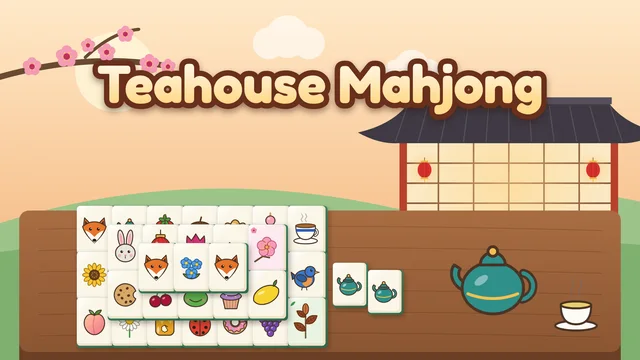
Match pairs of free tiles to clear 36 stacked boards in four seasonal tea rooms, with illustrated Garden tiles or the Classic set. Every deal can be cleared, and hint, shuffle and undo are free.

Match 3 by swapping
Potion Pantry Match
Swap neighboring potions, herbs, crystals and candles on an 8 by 8 pantry shelf to line up three, brew specials and fill 30 recipes’ goals before the moves run out. There is no timer.
Memory pairs
Toasty Tile Flip
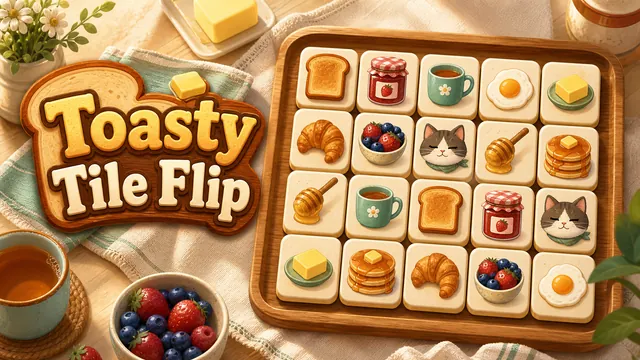
Flip breakfast cards two at a time and clear 20 cafe trays of pairs, with butter combos, toaster peeks and burnt toast to avoid. Seventeen of the twenty trays have no clock.
Matching by dragging a line
Jam Jar Match
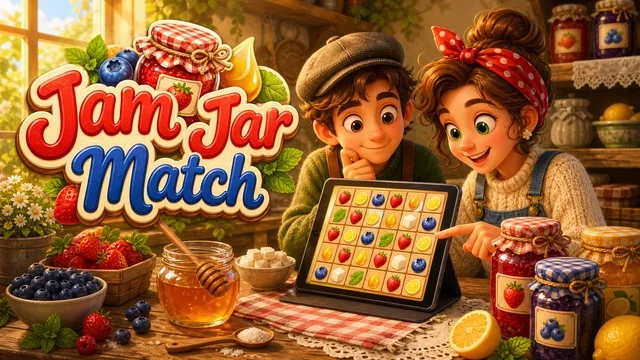
Drag a sticky jam line through three or more matching fruits that touch, and close a loop to clear every fruit of that kind. It is a connect-the-fruit puzzle, not a swap game, with 24 levels and a move limit on each.

Matching by tapping a group
Pumpkin Patch Panic
Tap a group of three or more touching pumpkins of the same kind to load the hay wagon while new rows sprout from the soil. Twelve farm days run up to Halloween, then an endless Moonlight Patch.
Dominoes: matching tile ends
Pinecone Pass Mexican Train
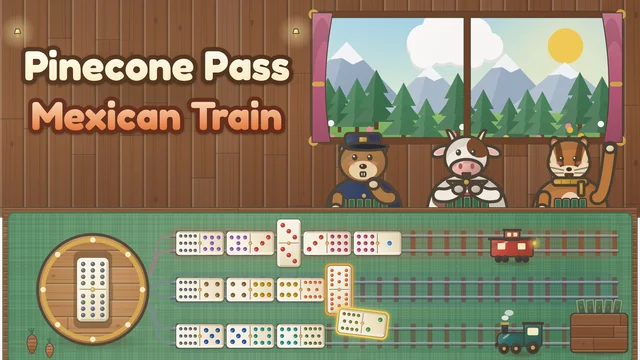
Classic Mexican Train dominoes with a double-twelve set, for two to four players with friendly computer players at three levels. On your turn, play a tile with an end that matches the open end of a train.
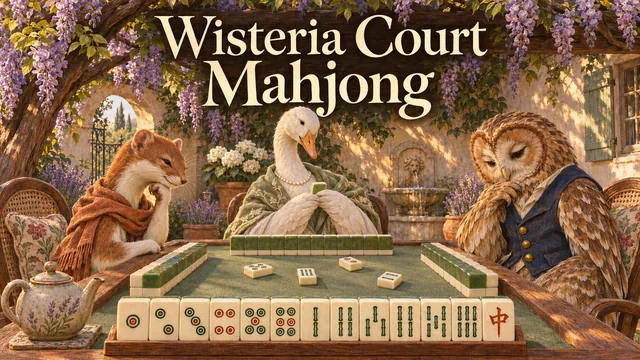
Real mahjong, not a matching game
Wisteria Court Mahjong
Real four-player mahjong against three hosts, in Hong Kong style or American style, with eight short lessons, a coach and hints. You draw, discard, call pung and build a winning hand.
The four kinds of tile matching game
In triple tile match, a heap of tiles lies in layers, you pick uncovered tiles into a small holding area, and when three alike gather they clear. The puzzle is the order, because the holding area is small. Ornament Match is this game with a Christmas coat: the heap is a box of ornaments, the holding area is a branch with seven hooks, and three alike go to the tree.
Mahjong solitaire is a one-player puzzle played with mahjong tiles. A tile is free when nothing lies on it and one side is open, and you match two free tiles that are alike. Teahouse Mahjong is this game.
Match 3 is a different idea: pieces sit on a grid and you line up three or more of a kind. Potion Pantry Match swaps neighbors, Jam Jar Match drags a line, and Pumpkin Patch Panic taps a group. The pieces there are potions, fruit and pumpkins rather than tiles, but they are the games people find when they search for tile match games.
Memory pairs turn tiles face down. You flip two, and if they match they stay face up. Toasty Tile Flip is this game, with breakfast cards.
How triple tile match works in Ornament Match
A box of ornaments lies in a heap, layer on layer. Only an ornament with nothing lying on it can be picked up, and shaded ones are covered and wait. Tap one and it hangs on the branch beside any of its own kind. The branch has seven hooks. When three alike hang there they fly to the tree and free their hooks. If all seven hooks fill with no three alike, the branch is too tangled, and you can take the last ornament back, add a spare hook or try the box again. Ribbons you have earned are kept.
Each of the twelve ornaments has its own shape as well as its own color. Every box is dealt along a winning order, so there is always a way through, and the game says the same of Shuffle, which deals the ornaments left in the box the same way. Undo puts the last ornament back (twice per box), Shuffle trades the places of the ornaments left (once per box) and the spare hook adds an eighth hook. Thirty boxes fill three evenings, and Tonight’s box is one new box for every date. The page says there is no timer, no lives and no moves to run out of.
The game’s own tips are worth taking. Before tapping, look for an ornament that matches a pair already on the branch, because a third one always frees two hooks. Uncover before you collect: an ornament that frees two or three covered ones is often worth a hook. And with two hooks left, only hang something that makes three or that has a partner on top of the heap.
Mahjong solitaire, and why it is not mahjong
In Teahouse Mahjong you tap a free tile and then tap a free tile that matches it, and the pair leaves the board. A tile is free when no tile lies on top of it and at least one side, left or right, has no tile touching it. Most tiles have exactly three twins, and the bonus tiles are different: any two blossoms match and any two tea leaves match. There are 36 boards in four tea rooms, from 36 tiles on two layers to 144 tiles on five, and you can switch between illustrated Garden tiles and the Classic set at any time. Every deal is built so it can be cleared. If you get stuck by taking pairs in a different order, Shuffle rearranges the tiles left into an arrangement that can be cleared.
Real mahjong is another game. It is played by four people with a wall of tiles: you draw a tile, discard a tile, call a discard to complete a set, and aim to build a winning hand of sets and a pair. Wisteria Court Mahjong is that game, against three hosts, in Hong Kong style or American style, and its page says it is “not the matching game”. If you came to match tiles, play Teahouse Mahjong; if you came to learn the real game, Wisteria Court Mahjong has eight short lessons.
Match 3 and its cousins
Potion Pantry Match is a swap match 3 on an 8 by 8 shelf. Swap two neighboring pieces up, down, left or right to line up three or more of the same ingredient, and a swap that makes no line slides back and costs nothing. A match of four brews a line potion, an L or T shape brews a cauldron and five brews a rainbow elixir. Each of the 30 recipes has up to four goals and a move limit, and the page says there is no timer.
Jam Jar Match is not a swap game, and its page says so. You press a fruit and drag through three or more matching fruits that touch up, down, left or right, and let go to clear the chain. Link back into a fruit already in your line to close a loop and clear every fruit of that kind. It has 24 levels with a move limit each, and the page says there is no timer.
Pumpkin Patch Panic is a tap match. You tap a group of three or more touching pumpkins of the same kind to send them to the wagon, and a new row sprouts along the bottom in real time. It is the one game here that is not at your own pace: the patch keeps growing, but pausing from the toolbar stops it completely. It is set in the days before Halloween.
Memory pairs in Toasty Tile Flip
Tap a card to turn it over, then tap another. A matching pair stays face up and anything else turns back. Cards you have seen get a crumb. New cards are always safe, but a crumbed card that turns out wrong costs a toast heart, and you lose the tray if the hearts run out. There are 20 trays, from a 12-card warm-up to 24-card brunch trays. Later trays add butter combos, toaster peeks, burnt slices with no partner, table orders and triples. Three rush trays have a clock, which starts with your first card, and the other 17 have none.
The game’s tips: turn cards without a crumb while there are any, because they can never cost a heart, and remember burnt slices as carefully as treats.
Dominoes: matching tile ends
Pinecone Pass Mexican Train is a tile game where you match ends rather than pairs. Each round starts from a double in the station, and on your turn you play one tile with an end that matches the open end of a train you may use: your own train, the Mexican Train, or any train with a marker. It uses a double-twelve set of 91 tiles for two to four players, with friendly computer players at three levels. You are not clearing a board: you build a train, and after the rounds the lowest total of dots left in hand wins. Its page estimates about two minutes a round.
Which one to pick: a short session, no timer or a phone
For a short session, the pages estimate Toasty Tile Flip at 1 to 3 minutes a tray, Potion Pantry Match at 2 to 4 minutes a recipe, Jam Jar Match at 2 to 4 minutes a level, Pumpkin Patch Panic at 1 to 4 minutes a day, Ornament Match at 2 to 6 minutes a box and Teahouse Mahjong at 3 to 10 minutes a board. Those are estimates, not measured times.
For no timer, pick Ornament Match, Teahouse Mahjong, Potion Pantry Match or Jam Jar Match: their pages say nothing counts down, with Potion Pantry Match and Jam Jar Match ending on a move limit instead. Toasty Tile Flip has no clock on 17 of its 20 trays. Pumpkin Patch Panic is the one to skip if you want no time pressure.
For a phone, each game here lists mobile among its supported devices. Teahouse Mahjong’s page says every board is sized to keep tiles large on phones, and Toasty Tile Flip’s page says it plays on phones, tablets and desktops, with the tray turned on its side on landscape screens.
Quick Picks
Start with the one that matches what you need right now. Each pick is free in your browser.
- Triple tile match: Ornament Match
- Mahjong solitaire: Teahouse Mahjong
- Match 3 by swapping: Potion Pantry Match
- Memory pairs: Toasty Tile Flip
- Matching by dragging a line: Jam Jar Match
Choosing between these games
The first six games are here because their pages describe matching tiles, cards or pieces, and each stands for one kind. Pinecone Pass Mexican Train and Wisteria Court Mahjong are here because people searching for tile games often want them, and the page says plainly that they are not matching puzzles in the same sense.
This page does not claim that any of these games improves memory or any other ability. They are games to enjoy. Saves stay on the device you play on.
CozyWorld publishes every game in this article. Session lengths, controls and features come from each game's rules and our automated browser checks, not from testing on every device.
Which One Should You Play First?
If you want one game to try, pick by kind. Ornament Match for triple tile match, Teahouse Mahjong for mahjong solitaire, Potion Pantry Match for match 3 and Toasty Tile Flip for memory pairs. Each saves your progress on the device you play on, though a recipe or tray in progress in Potion Pantry Match and Toasty Tile Flip is not saved.
If you were looking for real mahjong or dominoes, the last two games are those, and neither works like the matching games above.
Related guides and roundups
FAQ
Show questions
What is a tile matching game?
A game where you clear or collect tiles by matching them. The common kinds are triple tile match (three alike clear), mahjong solitaire (matching free pairs on a stacked board), match 3 (lining up three pieces on a grid) and memory pairs (flipping two tiles). CozyWorld has a free browser game for each.
What is triple tile match?
A tile game where you pick tiles from a heap into a small holding area, and every three alike clear. In Ornament Match the heap is a box of ornaments, the holding area is a branch with seven hooks, and three alike go to the tree.
Is mahjong solitaire the same as mahjong?
No. Mahjong solitaire is a one-player puzzle that uses mahjong tiles: you match pairs of free tiles to clear a board. Mahjong is a four-player game in which you draw, discard and build a winning hand. Teahouse Mahjong is the first and Wisteria Court Mahjong is the second.
Are there tile matching games with no timer?
Yes. Ornament Match, Teahouse Mahjong, Potion Pantry Match and Jam Jar Match say nothing counts down, and Toasty Tile Flip has no clock on 17 of its 20 trays.
Can I play tile matching games on my phone?
Each game on this page lists mobile among its supported devices, and they run in a browser with no download.
See Also
Match mahjong tiles, solve sudoku and killer sudoku, slide 2048 tiles, make 24 from four number cards, sweep a minesweeper board, stitch a nonogram, find hidden words, unscramble a word, fit a jigsaw, rake leaf piles, sort shells, merge fruit or crack firefly codes. Choose a puzzle by the decisions it asks you to make.
Free Online Games for Seniors and Older AdultsFor a free online jigsaw, start with Rainy Day Jigsaw and work at your own pace. If you prefer familiar card or word games, Porch Swing Solitaire uses Klondike rules and Cottage Word Search lets you look for themed words. All three open in a browser without an account or a countdown.
Free Online Games for Adults: No DownloadGrown-up games that open in a browser tab: classic cards and board games, sudoku, a village whodunit and a village to share, plus the best free game sites run by newspapers and nonprofits.
Satisfying Games: Free Browser Games, No InstallSatisfying games are the ones where a mess clicks into order: shells close into a clam, parcels slide into a van, tiles leave the board in pairs. CozyWorld has fourteen of them that run free in a browser, grouped here by the kind of satisfaction, and most have no timer.