Cozy Classic
Free Real Mahjong
Wisteria Court Mahjong
The real four-player game, in two styles at one table: Hong Kong style scored in faan, and American style with jokers, a Charleston and a practice card of hands. Eight lessons, a coach line, hints that explain, three levels and a saved game.
Read the full Wisteria Court Mahjong guide
How to play
- Choose Hong Kong or American on the title card, then press Play. During a game, open Menu and select Choose game style to return to that choice. You can continue your hand or confirm a new game in the other style. You hold 13 tiles along the bottom, sorted by suit. Imogen sits on your left, Beatrix across and Leopold on your right. The player marked E is East, the dealer, who starts with 14 tiles and discards first.
- On your turn you draw a tile from the wall (it arrives at the right of your rack) and discard one. Tap a tile to lift it and tap it again to discard it. Play passes to your right.
- Hong Kong style: build four sets and a pair. A set is a chow (three in a row in one suit), a pung (three alike) or a kong (four alike). When someone discards a tile you can use, buttons appear: Pung or Kong from anyone, Chow only from the player just before you, Mahjong from anyone, or Pass. A claimed set is laid face up and you then discard.
- American style: first comes the Charleston. Pick three tiles you do not need and pass them right, then across, then left; the table may go round once more. Then build one of the hands on the practice card. You may call a discard only to finish a group of three or more that your hand needs, or for mahjong. A joker stands in for any tile in a group of three or more.
- When your hand is complete a Mahjong button appears. The result card shows the winning hand, how it scored and who pays. Hong Kong hands score in faan; American hands score the value on the card.
- A game is 4, 8 or 16 hands. The deal passes to the right after each hand, and the highest total at the end finishes first.
Controls
- Touch or mouse: tap a tile to lift it and tap it again to discard it, or switch to discarding on one tap in Settings. Claims, passes, the Charleston and Mahjong use the buttons under your rack. Hint, Card (or Scoring) and Menu sit on the shelf at the bottom. Tap the wall counter on the mat to hear how many tiles are left.
- Keyboard: the arrow keys move along your rack and Enter or Space lifts or discards the tile in focus. D discards the lifted tile, P passes on a discard or sends your Charleston pass, M declares mahjong, H shows a hint, C opens the card or the scoring table, S opens the score sheet, N deals the next hand and Escape clears a pick.
- Menu includes Choose game style, New game, lessons, the score sheet, the card or scoring table, Settings, statistics and rules. The toolbar has restart, pause, help, optional sound, fullscreen and the Larger text switch (in the game menu on a phone).
What you do
Wisteria Court Mahjong is the real game of mahjong for four, the one played with a wall of tiles, discards and calls of pung and kong, set at an oak table in a walled garden court under a pergola of wisteria. You play against three hosts: Leopold the tawny owl on your right, Beatrix the goose across the table and Imogen the stoat on your left. Choose Hong Kong style for the classic game of four sets and a pair, with chows, pungs, kongs, flowers and scoring in faan. Choose American style for 152 tiles with eight jokers, the Charleston passes before play, and a hand built from a card of patterns. American players use a card that changes every year; this table has its own Wisteria Court Practice Card of 24 hands, written for the court, so anyone can learn how a card works without owning one. If mahjong is new to you, eight short lessons teach the tiles, the sets, a winning hand, a turn, scoring, the card, the Charleston and jokers, each with real tiles and a question or two. A coach line under the table explains each choice as it comes up, Hint suggests a move and says why, and the Scoring and Card buttons keep the reference a tap away. The hosts play at three levels and never look at your tiles. A game is four, eight or sixteen hands, saved on your device after every move.
- Two styles at one table: Hong Kong style with chows, pungs, kongs, flowers, robbing the kong and 27 scoring patterns in faan, and American style with jokers, the full Charleston with blind passes and a courtesy pass, calls, joker swaps and concealed hands.
- The Wisteria Court Practice Card: 24 original hands in nine families, from runs in one suit to winds and dragons, quints and concealed pairs. The Card button shows the three hands your rack is closest to, tile by tile, with the tiles you still need shown faint.
- Eight short lessons with real tiles and questions answered by tapping: the tiles, the three kinds of set, a winning hand, a turn, counting faan, reading the card, the Charleston, and jokers and calling.
- A coach line that explains each choice as it comes up, and hints that name a move and give the reason, such as how many tiles would bring you closer or which hand on the card you are nearest to.
- Three levels for the table. Gentle plays loosely, Steady builds sensibly and claims what helps, and Sharp counts tiles, plays for value and avoids feeding a hand that looks ready.
- A result card after every hand shows the winning tiles face up, every scoring line or the card hand that won, and what each player pays, with a score sheet for the whole game.
Tips worth knowing
- In Hong Kong style, let go of lone winds and dragons early unless you hold a pair. A single honor tile cannot join a chow, so it is the hardest tile to use.
- Keep tiles that sit next to each other. A four and a five can become a chow with a three or a six, which is eight tiles that help; a pair needs one of only two.
- Think before you claim. Calling a pung speeds your hand up but shows the table what you are doing, and a hand with nothing claimed scores an extra faan.
- In American style, use the Charleston to commit. Look at the Card button, pick the one or two families your rack is nearest to, and pass everything that fits neither.
- Never throw away a joker lightly, and never plan a pair around one. Jokers only fill groups of three or more.
- Watch the discards. A tile with three copies already on the mat can never become your pung, and late in a hand the tiles nobody has thrown are the dangerous ones.
- Use the hint to learn. It looks only at what you can see and says why.
Accessibility
- Everything can be played with a keyboard: the arrow keys move a visible focus along your rack, Enter or Space lifts and discards, and single letter keys pass, declare mahjong, hint, open the card and the score sheet and deal the next hand.
- Every tile in your rack is labeled for screen readers with its name and whether it was just drawn, passed to you or picked. The discards and each set on the table read out their tiles, the name plates read each player’s wind, tile count and score, and each event is announced in words.
- Character tiles carry a numeral in the corner and wind tiles a letter, so no tile depends on reading Chinese characters. The practice card marks suits by color and also explains every hand in a sentence.
- The Larger text switch, in the toolbar or the game menu and on the Accessibility page, keeps every tile its size and gives it a bold face with heavier outlines and darker ink. Numbered tiles and winds carry a numeral or letter about twice the size in the corner, now on dots and bamboo too. The names, scores, wall count, coach line, buttons, cards, practice card, scoring table and lessons get bigger, and the hosts’ portraits get smaller to make the room. It is remembered on this device.
- Nothing is timed. The table waits while a card is open, its speed can be set to Relaxed, and the discards stay on the mat for the whole hand.
- Reduced motion places tiles at once instead of sliding them and keeps the hosts still. Sound is optional and never needed to play.
Questions
Is this real mahjong or the matching game?
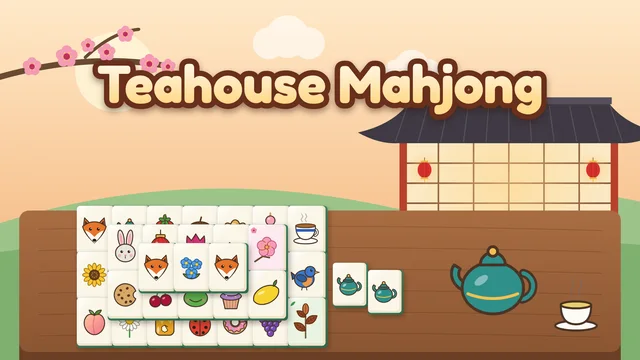
It is the real four-player game: you draw from a wall, discard, claim tiles for pungs, kongs and chows, and win by completing a hand. The tile-matching puzzle often called mahjong is a solitaire game that borrows the tiles. CozyWorld has that too, as Teahouse Mahjong.
Which rules does it use?
Hong Kong style follows the common Hong Kong Old Style game: 144 tiles, four sets and a pair, 13 tiles each, flowers replaced from the back of the wall, and scoring in faan with a limit of 10. American style follows the usual American table rules: 152 tiles with eight jokers, the Charleston, no chows, calls for groups of three or more, joker swaps and concealed hands. A few things are simplified so a game has a set length: the deal passes on after every hand, the wall is played to its last tile, and scores are paid as plain points. The Rules card in the menu lists exactly how this table plays.
Is the American card the official one?
No. American players use a card of hands that is published fresh each year and has to be bought. This table uses its own Wisteria Court Practice Card: 24 original hands, written for this game, that work the same way as a real card with suits shown by color, flowers, winds, dragons, jokers and concealed hands. It teaches you to read and play from a card, and the skill carries over when you sit down with your own group and its card.
I have never played. Where do I start?
Open Lessons on the title card and take the first four, which need about ten minutes. Then play Hong Kong style at Gentle with the smallest winning hand set to Any hand, which is the default. The coach line tells you what each choice means, and Hint suggests a move with the reason.
How strong is each level?
We measured the levels with our own simulation of computer-only hands, with the seats moving round the table. With four equal players each wins about a quarter of the hands that are won. In Hong Kong style, over 600 hands at a table of one Sharp, two Steady and one Gentle player, the Sharp seat won about 32 percent of hands, each Steady seat about 28 percent and the Gentle seat about 13 percent. In American style, over 1,200 hands at a table of two Sharp and two Steady players, each Sharp seat won about 25 percent of hands against about 21 percent for each Steady seat, and came out ahead on points. The gap between Sharp and Steady is smaller in American style than in Hong Kong style. These are computer players, not people, and mahjong has a good deal of luck in a single hand, so treat the numbers as a guide.
Do the hosts look at my tiles?
No. Leopold, Beatrix and Imogen each choose from what a player at the table could see: their own tiles, the discards, the sets laid face up and the flowers set aside. The hints follow the same rule. Our tests reshuffle every tile a player cannot see, many times over, and check that not one of the hosts’ choices or hints changes.
What is the Charleston?
The exchange of tiles that opens every hand of American mahjong. Everyone passes three unwanted tiles to the right, then across, then to the left. Unless a player stops it, a second round goes left, across and right. On the last pass of each round you may pass blind, sending on tiles that are coming to you without looking at them. A final optional pass with the player across is called the courtesy pass.
What does the game save?
It saves after every move: your settings, the game in progress (every pass, draw and discard, so you can close the page mid-hand and carry on later), your statistics for each style and level, and which lessons you have finished. Everything stays in this browser’s local storage, with no account.
Is there a large print version of Real Mahjong?
Yes. Turn on Larger text in the toolbar, or in the game menu on a phone. Every tile gets a bold face with darker ink at the same tile size, numbered tiles and winds get a big numeral or letter in the corner, and the names, scores, wall count, coach line, buttons, the practice card, the scoring table, the lessons and the result cards get bigger. It takes effect mid-hand and is remembered on this device.
Guides and roundups
- How to Play Mahjong: Rules for Beginners
- American Mahjong Rules: Charleston and Jokers
- Mahjong Tiles: Names and Meanings of Every Tile
- Mahjong Hands and Scoring: Hong Kong Faan Chart
- Hong Kong, American and Riichi Mahjong Compared
- Free Online Games for Adults: No Download
- Tile Matching Games: Four Kinds to Play Free
- Free Mahjong Games for Seniors, No Download
Game details
- Genre
- Cozy Classic
- Difficulty
- Medium
- Session
- About five minutes a hand, saved as you go
- Inputs
- Keyboard, Mouse, Touch
- Devices
- Desktop, Tablet, Mobile
- Made by
- CozyWorld
- Updated
- 2026-11-10
A quiet tile game with three computer players, played for points only, with no betting, purchases, accounts, timers or streak pressure.