
Maze 1
Free printable · Solve online
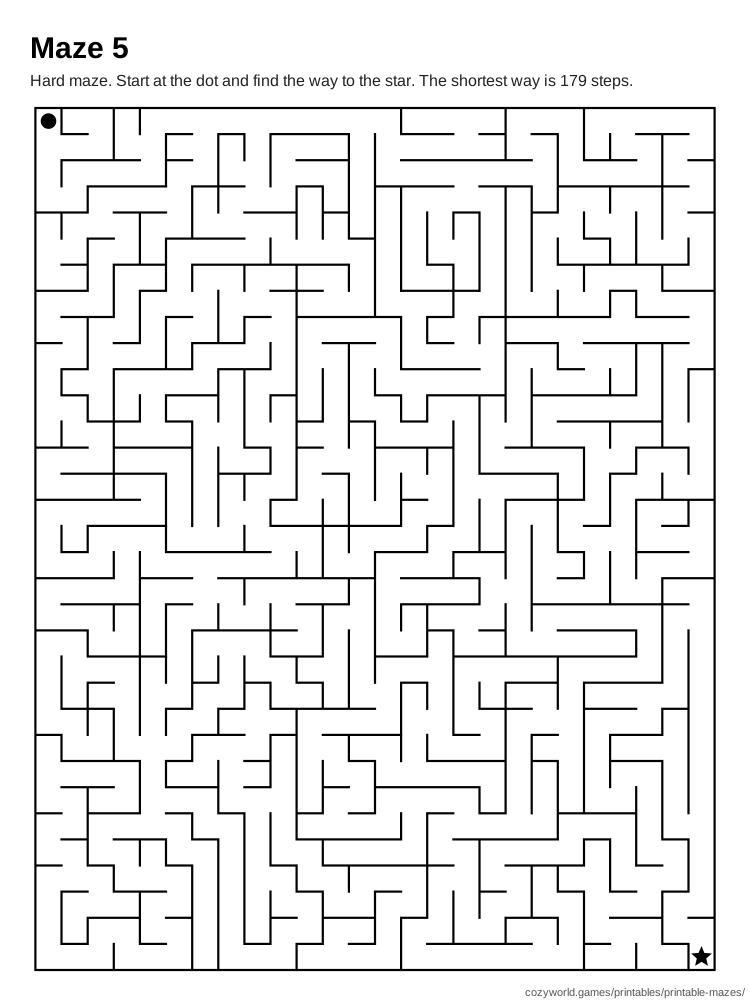
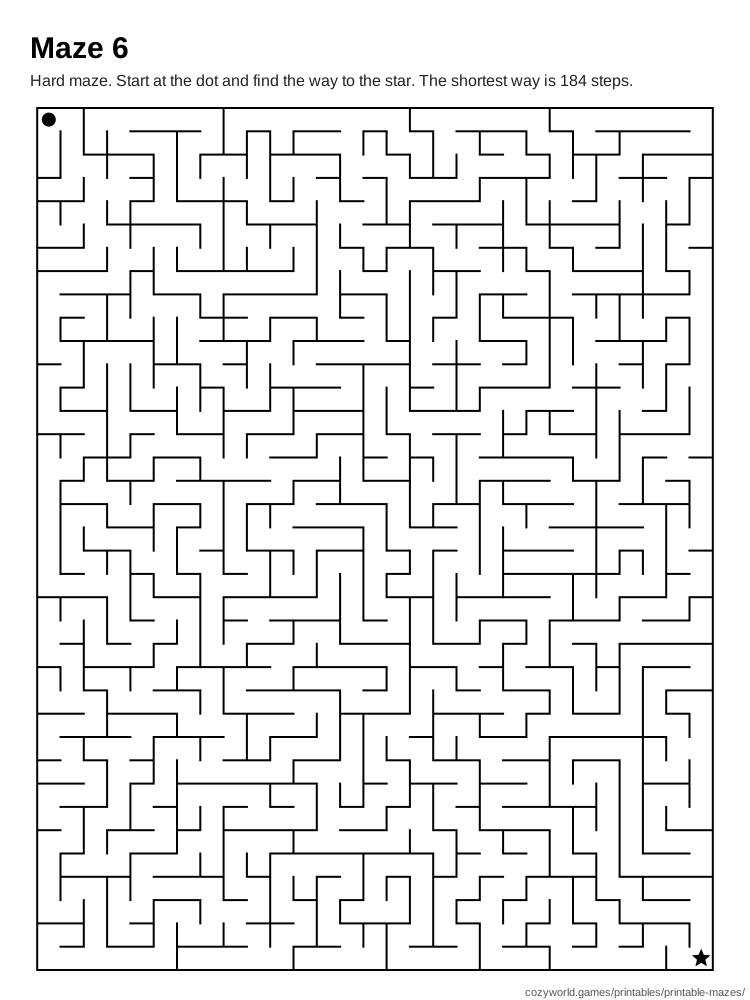
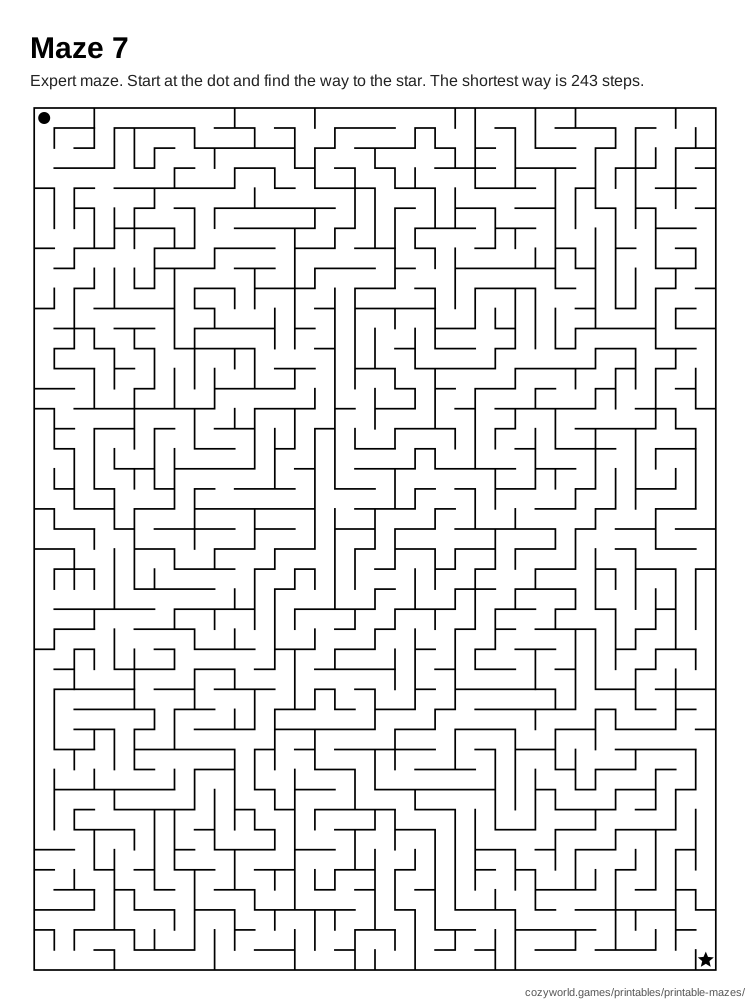
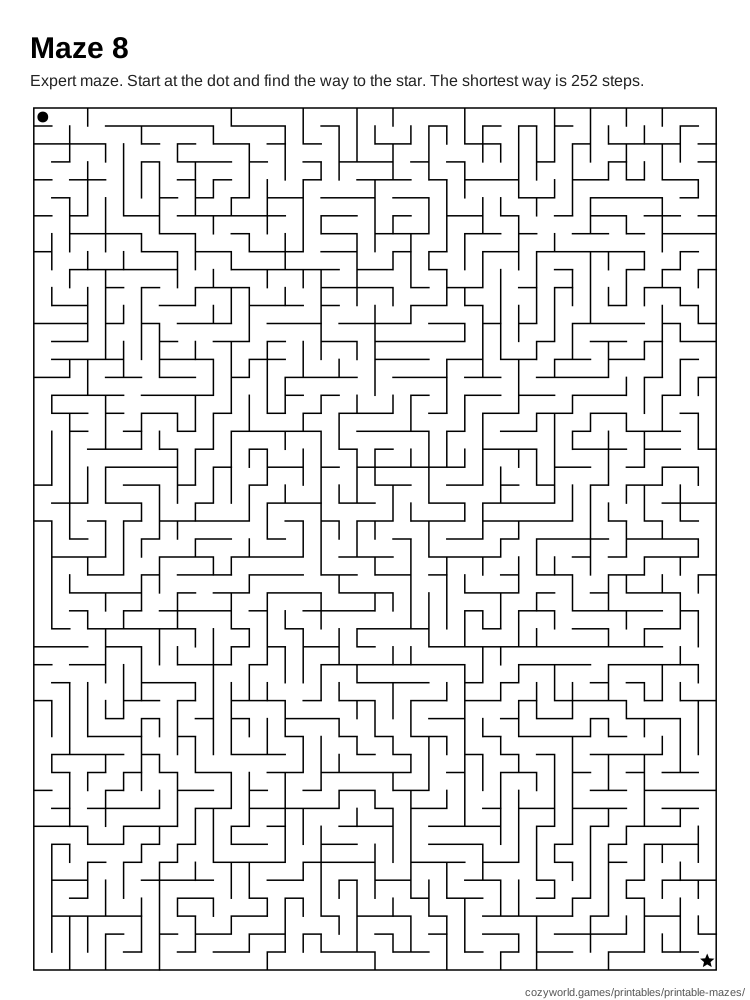
Eight mazes that climb from easy to expert: two at each level, from 12 by 15 squares up to 38 by 48. Start at the dot in the top left corner and find the way to the star in the bottom right.
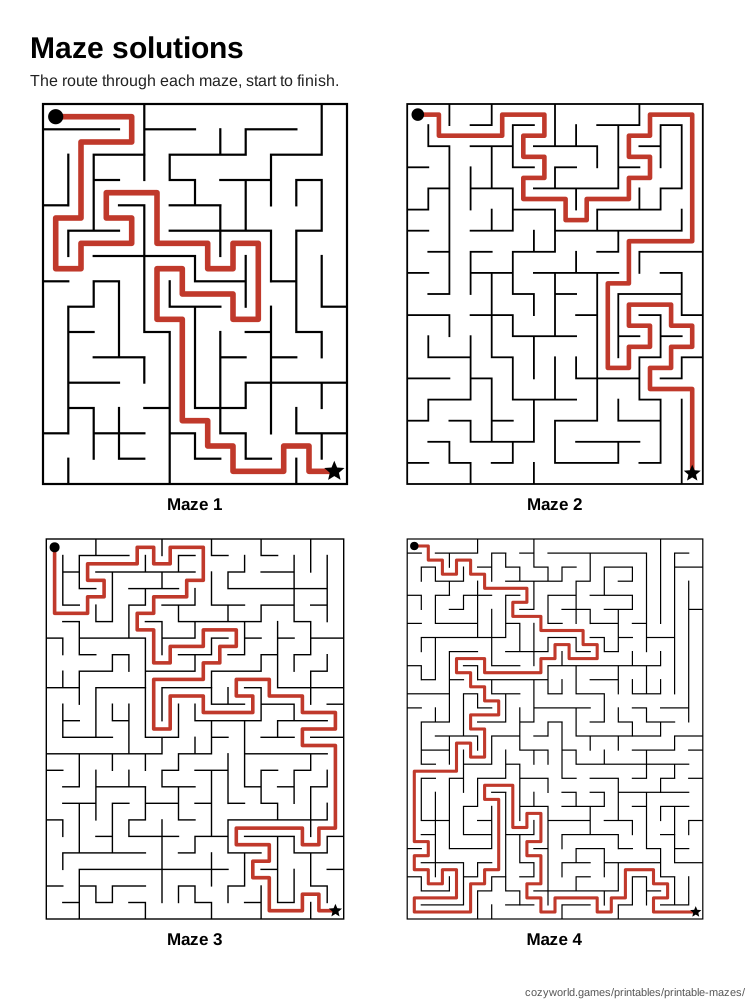
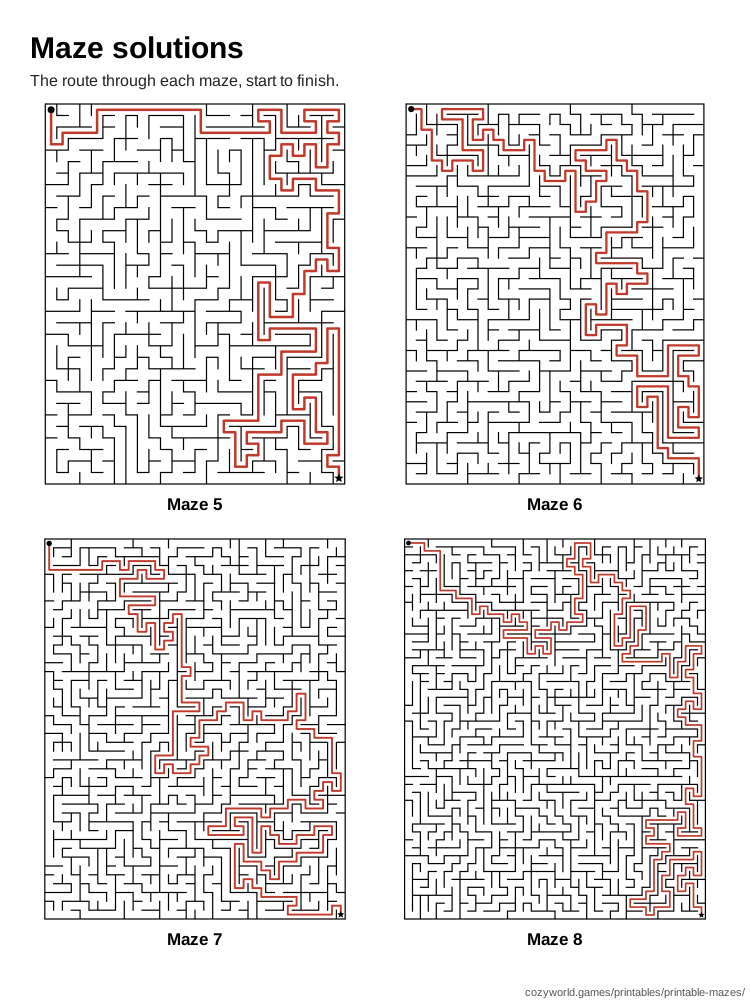
Every maze has exactly one route. There are no loops and no closed-off rooms, so each wrong turn ends in a dead end sooner or later. Solutions for all eight are on two pages at the end, and each maze can also be solved on screen further down this page.
Prints on US letter paper, one maze to a page: 8 pages, then the solutions (10 pages in all). Under every page is a button to print just that one. In the print window, choose your printer, or Save as PDF to keep a copy.
Drag from the dot along the corridors, or use the arrow keys or the buttons under the maze. A move runs on to the next turning. Go back over your trail to rub it out.
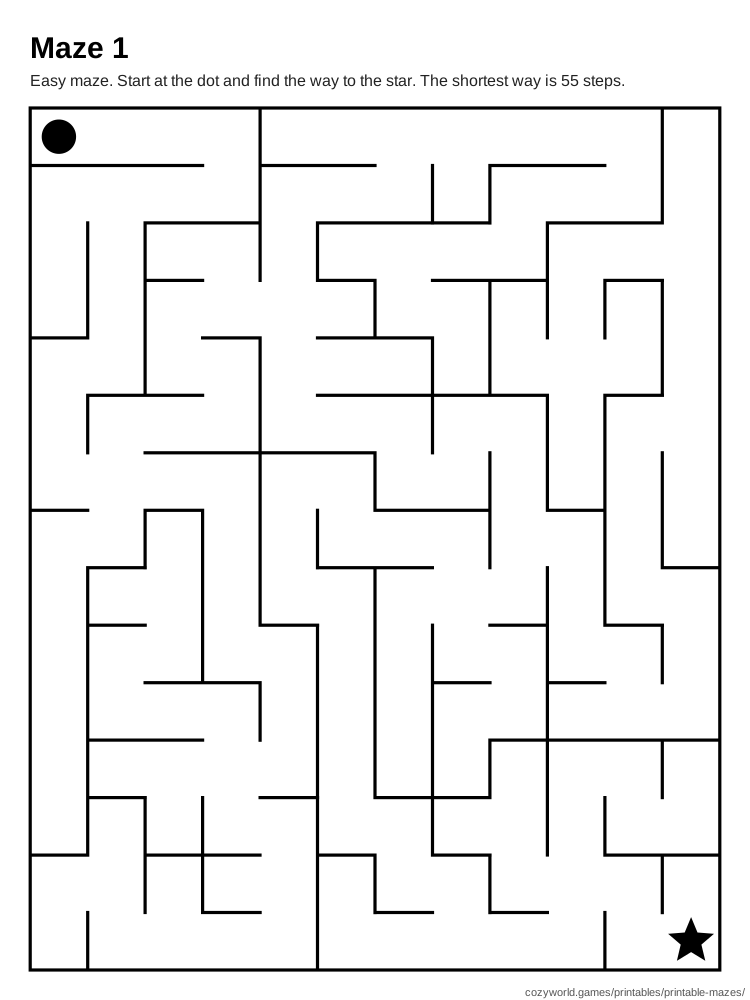
The level is set by size. The easy mazes have corridors more than half an inch wide, wide enough for a marker or a finger; the expert mazes have corridors under a quarter inch and want a sharp pencil. The shortest way through Maze 1 is 55 steps from square to square, and through Maze 8 it is 252.
Length matters as much as size. The longest route in the set belongs to Maze 8, at 252 steps, which means it doubles back across the page many times before it reaches the star.
A program carves each one. It starts with a grid where every square is walled in, then tunnels from square to square, mostly extending the newest corridor and sometimes branching from an older one, until every square has been reached once. Tunneling that way cannot make a loop, which is why each maze has a single route. Each maze here is the most winding of eight the program drew at that size.