
CozyWorld game guide · By CozyWorld
This guide covers our own game, written from the current game rules and browser checks.
It Takes a Village: Villagers, Improvements and Three Ways to Win a Year
Children love a big gang, grannies bake pies and cats simply cheer everyone up. Here is how each villager works and how to grow a crowd that finishes all twelve jobs.
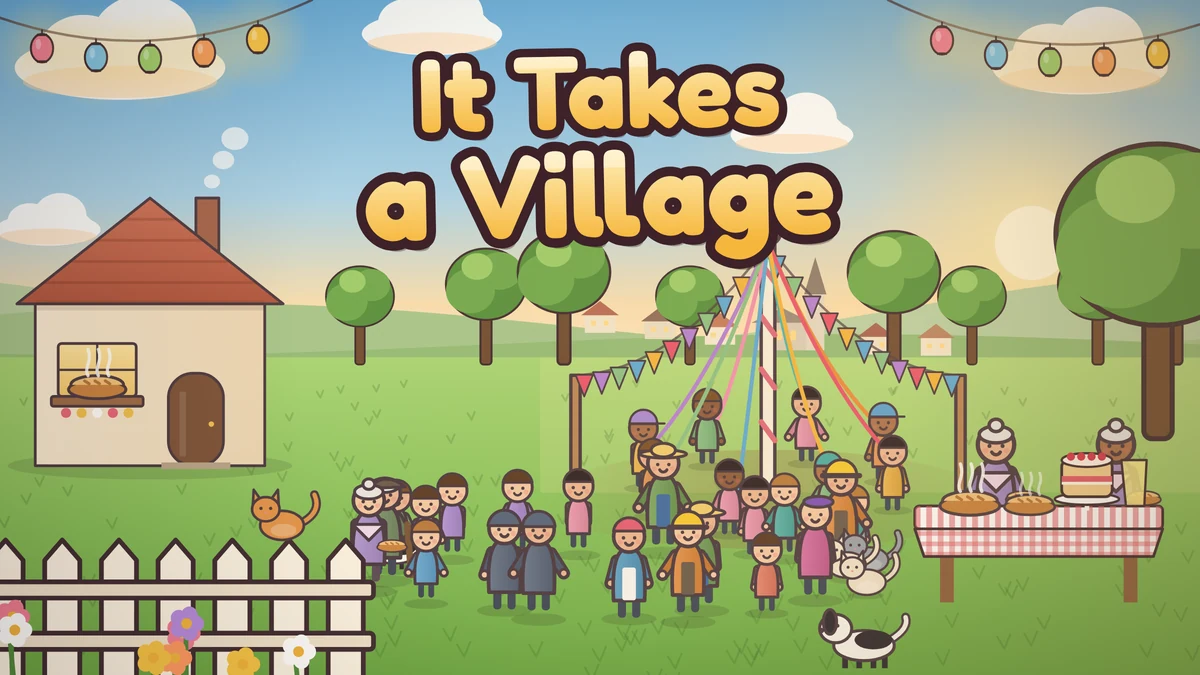
It Takes a Village is our cozy crowd builder. Over twelve 20-second days your whole village works one job at a time, from picking the early peas to lighting the winter lantern walk. Each day needs half as much work again as the one before, so the crowd has to grow and work well together. This guide explains what every villager does, how pies help, and three kinds of village that can finish the year.
How a day works
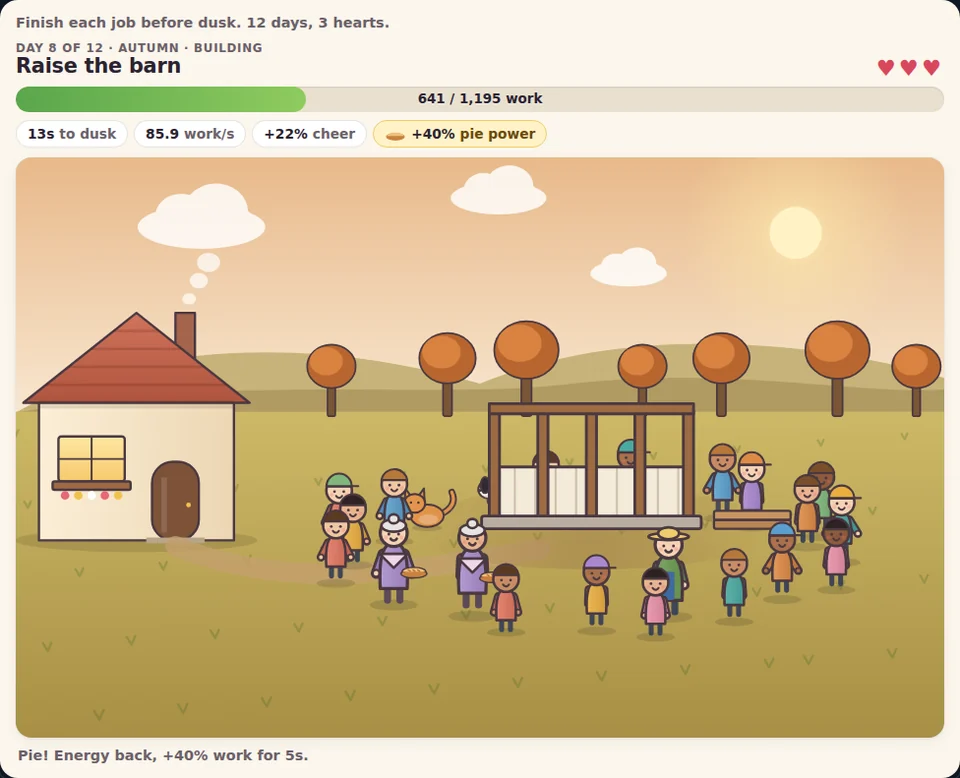
Each day shows one job, a bar of work to fill and the seconds left before dusk. Your villagers work automatically; you can watch the basket fill, the building rise or the bunting appear as they go. Fill the bar before dusk to finish the job and earn thanks. If dusk comes first, you lose one of your three hearts and move on to the next day.
There is nothing to tap during a day. Grannies bake pies on their own timer and serve them straight away: each pie refreshes tired villagers and adds five seconds of 40% extra work. One granny bakes every 7 seconds, two every 3.5 seconds, which keeps the boost going almost all day. Every real decision happens at the village meeting between days.
What each villager does
Children do 1 work a second on their own, plus 5% for every other member of their gang. Three children are barely useful; twenty children are a force of nature. A sheepdog does no work but counts as three children for the gang bonus. Children also tire fastest, and a tired villager works at barely a third of full speed.
Neighbours each have a trade: farmer, builder, tidier or decorator. They do 3 work a second, double on jobs that match their trade, and they tire slowly. Each time a job of their trade is finished, every neighbour of that trade gains a little permanent experience. Teenagers do 4 work a second but run out of puff quickly.
Grannies and grandpas only manage 0.6 work a second. Grannies bake pies, more often the more grannies you have. Each grandpa tells stories that slow down how quickly children tire. Cats do no work at all, but each one adds 5% cheer, which multiplies everyone.
Village meetings and improvements
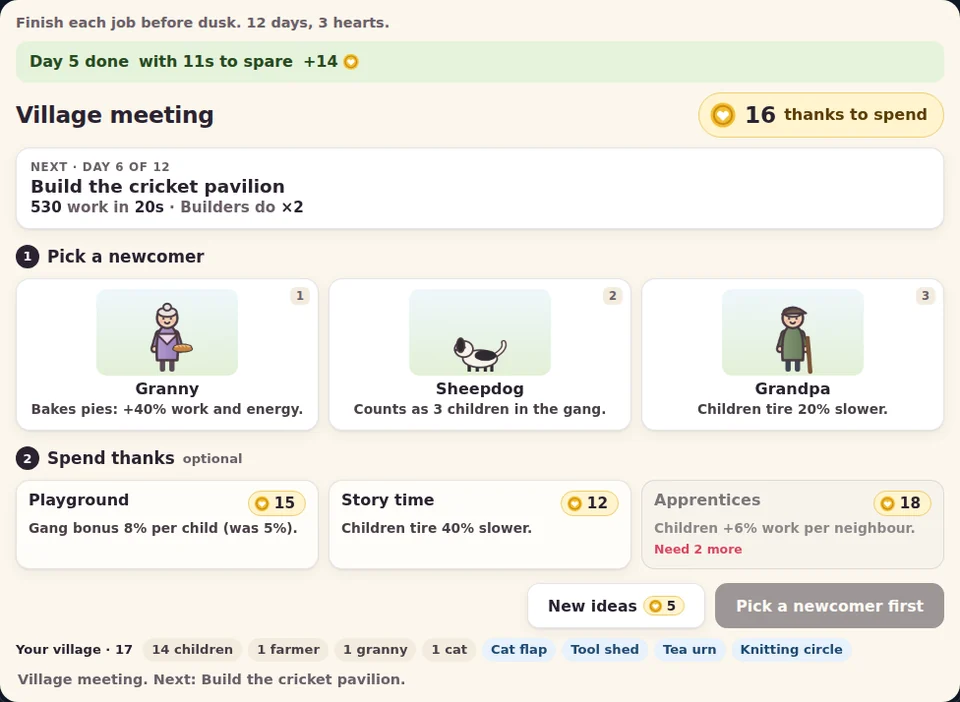
Between days you hold a village meeting. The meeting shows the next job, its target and which trade does extra, so you can plan ahead. You must welcome exactly one newcomer from the cards on offer, then you can spend thanks on improvements.
Thanks are limited. A finished job earns 5, plus up to 8 more for finishing early, plus a little extra later in the year. Improvements cost 10 to 20, and New ideas swaps the three on offer for 5 thanks. You will not afford everything, so improvements that suit your crowd are worth far more than a little of everything.
Three villages that can finish the year
The big gang: take every group of children and any sheepdog, add a grandpa or two, and buy Playground, Story time and Lap cats. The gang bonus grows with every child, so this village starts slowly and finishes strong. Keep a granny or two for pies, because a tired gang slows down badly.
The specialists: welcome neighbours whose trade matches the next job, and buy Tool shed and Know-how. Specialists gain experience every time they finish their kind of job, so a village of skilled neighbours keeps getting better. Early risers gives them extra time on the hardest days.
Cats and pies: collect two or more grannies and plenty of cats, then buy Big oven, Busy hands, Cat flap and Knitting circle. Grannies barely work themselves, so this village leans on cheer and pie power to multiply a small crowd. Beyond two grannies, extra ones mostly add energy rather than more boost, so spend later picks on workers.
Controls, saving and accessibility
Days play out on their own. At a meeting, tap or click the newcomer and improvement cards; on a keyboard, number keys 1 to 4 choose a newcomer, and Tab with Enter or Space works on every button. The toolbar offers pause, help, restart, optional sound and fullscreen.
Only your best score is saved, on this device. A year in progress is not saved, so reloading starts a new year. Reduced motion stops the bobbing crowd and the pie steam, but days still run on a 20-second timer. We checked the game with automated desktop and phone browser runs and simulated thousands of years to tune the difficulty. These are not tests on physical devices or with real players.
Grow another village
Every year brings a different run of jobs, newcomers and improvements, so no two villages grow quite the same way. Try a different build next time, and see whether your best score survives. If you enjoy planning a small team, Oven and Apron is a turn-based baking puzzle with a similar feel.